NEWS RELEASE|| 𝗥𝗲𝗴𝗶𝗼𝗻𝗮𝗹 𝗢𝗿𝗶𝗲𝗻𝘁𝗮𝘁𝗶𝗼𝗻 𝗨𝗻𝗱𝗲𝗿𝘀𝗰𝗼𝗿𝗲𝘀 𝗘𝘁𝗵𝗶𝗰𝗮𝗹, 𝗜𝗻𝗰𝗹𝘂𝘀𝗶𝘃𝗲 𝗗𝗶𝘀𝗮𝘀𝘁𝗲𝗿 𝗥𝗶𝘀𝗸 𝗥𝗲𝗱𝘂𝗰𝘁𝗶𝗼𝗻 𝗖𝗼𝗺𝗺𝘂𝗻𝗶𝗰𝗮𝘁𝗶𝗼𝗻
Jul 29, 2026 - 1 minute read
July 20, 2026 BUTUAN CITY, July 20, 2026 – 𝗗𝗶𝘀𝗮𝘀𝘁𝗲𝗿 𝗰𝗼𝗺𝗺𝘂𝗻𝗶𝗰𝗮𝘁𝗶𝗼𝗻 𝘀𝗵𝗼𝘂𝗹𝗱 𝗯𝗲 𝗴𝘂𝗶𝗱𝗲𝗱 𝗯𝘆 𝗮𝗰𝗰𝘂𝗿𝗮𝗰𝘆, 𝗲𝗺𝗽𝗮𝘁𝗵𝘆, 𝗶𝗻𝗰𝗹𝘂𝘀𝗶𝘃𝗶𝘁𝘆, 𝗮𝗻𝗱 𝗿𝗲𝘀𝗽𝗼𝗻𝘀𝗶𝗯𝗹𝗲 𝗿𝗲𝗽𝗼𝗿𝘁𝗶𝗻𝗴 𝘁𝗼 𝗵𝗲𝗹𝗽 𝘀𝗮𝘃𝗲 𝗹𝗶𝘃𝗲𝘀 𝗮𝗻𝗱 𝘀𝘁𝗿𝗲𝗻𝗴𝘁𝗵𝗲𝗻 𝗽𝘂𝗯𝗹𝗶𝗰 𝘁𝗿𝘂𝘀𝘁, 𝗣𝗵𝗶𝗹𝗶𝗽𝗽𝗶𝗻𝗲 𝗜𝗻𝗳𝗼𝗿𝗺𝗮𝘁𝗶𝗼𝗻 𝗔𝗴𝗲𝗻𝗰𝘆 (𝗣𝗜𝗔) 𝗖𝗮𝗿𝗮𝗴𝗮 𝗜𝗻𝗳𝗼𝗿𝗺𝗮𝘁𝗶𝗼𝗻 𝗢𝗳𝗳𝗶𝗰𝗲𝗿 𝗡𝗶𝗻𝗮 𝗝𝗼𝗻𝗮𝗹𝘆𝗻 𝗚𝗮𝗺𝗯𝗲–𝗗𝗶𝗮𝗺𝗮𝗻𝘁𝗲 𝗲𝗺𝗽𝗵𝗮𝘀...
July 20, 2026
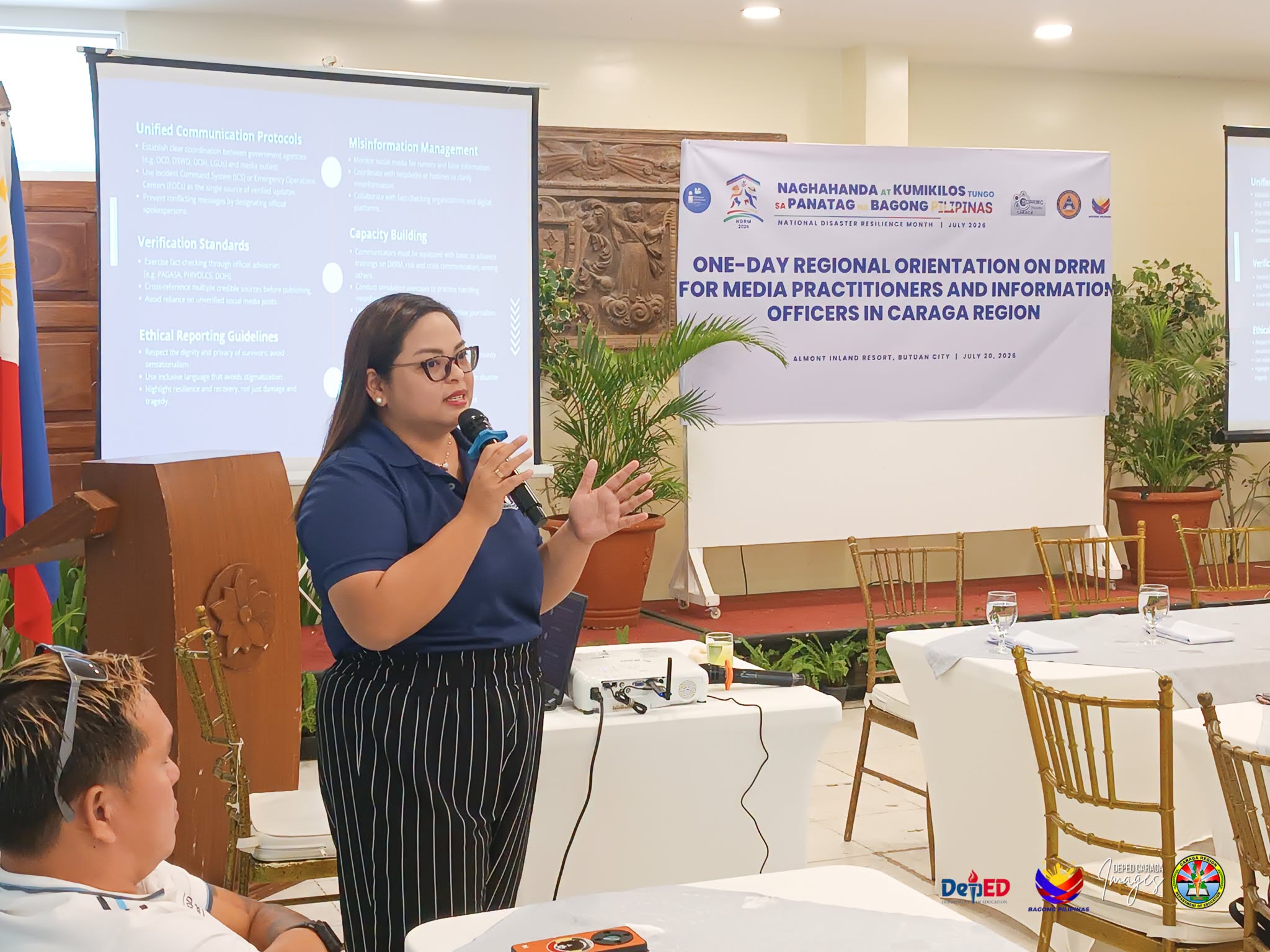
BUTUAN CITY, July 20, 2026 – 𝗗𝗶𝘀𝗮𝘀𝘁𝗲𝗿 𝗰𝗼𝗺𝗺𝘂𝗻𝗶𝗰𝗮𝘁𝗶𝗼𝗻 𝘀𝗵𝗼𝘂𝗹𝗱 𝗯𝗲 𝗴𝘂𝗶𝗱𝗲𝗱 𝗯𝘆 𝗮𝗰𝗰𝘂𝗿𝗮𝗰𝘆, 𝗲𝗺𝗽𝗮𝘁𝗵𝘆, 𝗶𝗻𝗰𝗹𝘂𝘀𝗶𝘃𝗶𝘁𝘆, 𝗮𝗻𝗱 𝗿𝗲𝘀𝗽𝗼𝗻𝘀𝗶𝗯𝗹𝗲 𝗿𝗲𝗽𝗼𝗿𝘁𝗶𝗻𝗴 𝘁𝗼 𝗵𝗲𝗹𝗽 𝘀𝗮𝘃𝗲 𝗹𝗶𝘃𝗲𝘀 𝗮𝗻𝗱 𝘀𝘁𝗿𝗲𝗻𝗴𝘁𝗵𝗲𝗻 𝗽𝘂𝗯𝗹𝗶𝗰 𝘁𝗿𝘂𝘀𝘁, 𝗣𝗵𝗶𝗹𝗶𝗽𝗽𝗶𝗻𝗲 𝗜𝗻𝗳𝗼𝗿𝗺𝗮𝘁𝗶𝗼𝗻 𝗔𝗴𝗲𝗻𝗰𝘆 (𝗣𝗜𝗔) 𝗖𝗮𝗿𝗮𝗴𝗮 𝗜𝗻𝗳𝗼𝗿𝗺𝗮𝘁𝗶𝗼𝗻 𝗢𝗳𝗳𝗶𝗰𝗲𝗿 𝗡𝗶𝗻𝗮 𝗝𝗼𝗻𝗮𝗹𝘆𝗻 𝗚𝗮𝗺𝗯𝗲–𝗗𝗶𝗮𝗺𝗮𝗻𝘁𝗲 𝗲𝗺𝗽𝗵𝗮𝘀𝗶𝘇𝗲𝗱 𝗱𝘂𝗿𝗶𝗻𝗴 𝘁𝗵𝗲 𝟭-𝗗𝗮𝘆 𝗥𝗲𝗴𝗶𝗼𝗻𝗮𝗹 𝗢𝗿𝗶𝗲𝗻𝘁𝗮𝘁𝗶𝗼𝗻 𝗼𝗻 𝗗𝗶𝘀𝗮𝘀𝘁𝗲𝗿 𝗥𝗶𝘀𝗸 𝗥𝗲𝗱𝘂𝗰𝘁𝗶𝗼𝗻 𝗮𝗻𝗱 𝗠𝗮𝗻𝗮𝗴𝗲𝗺𝗲𝗻𝘁 (𝗗𝗥𝗥𝗠) 𝗳𝗼𝗿 𝗠𝗲𝗱𝗶𝗮 𝗣𝗿𝗮𝗰𝘁𝗶𝘁𝗶𝗼𝗻𝗲𝗿𝘀 𝗮𝗻𝗱 𝗜𝗻𝗳𝗼𝗿𝗺𝗮𝘁𝗶𝗼𝗻 𝗢𝗳𝗳𝗶𝗰𝗲𝗿𝘀 𝗮𝘁 𝗔𝗹𝗺𝗼𝗻𝘁 𝗜𝗻𝗹𝗮𝗻𝗱 𝗥𝗲𝘀𝗼𝗿𝘁, 𝗵𝗲𝗿𝗲.
𝗘𝘁𝗵𝗶𝗰𝗮𝗹 𝗿𝗲𝗽𝗼𝗿𝘁𝗶𝗻𝗴 𝗽𝗿𝗼𝘁𝗲𝗰𝘁𝘀 𝗱𝗶𝗴𝗻𝗶𝘁𝘆
Diamante stressed that communicators must remain sensitive to the plight of people affected by disasters and avoid practices that further expose their vulnerability. "Let us be sensitive to their plight, especially for people affected by disasters and calamities," she said.
She reminded participants not to sacrifice the privacy and dignity of affected individuals in pursuit of a story, particularly by avoiding the publication of photos of minors without consent and by ensuring that the identities of vulnerable individuals are protected. "Our responsibility is to respect their dignity," she emphasized.
𝗨𝘀𝗲 𝗶𝗻𝗰𝗹𝘂𝘀𝗶𝘃𝗲, 𝗽𝗲𝗼𝗽𝗹𝗲-𝗰𝗲𝗻𝘁𝗲𝗿𝗲𝗱 𝗹𝗮𝗻𝗴𝘂𝗮𝗴𝗲
Highlighting the importance of inclusive communication, Diamante encouraged media practitioners and information officers to use language that empowers rather than stigmatizes disaster-affected communities. She also advised avoiding derogatory or stigmatizing expressions when discussing poverty, displacement, health impacts, and vulnerable sectors.
𝗩𝗲𝗿𝗶𝗳𝘆 𝗶𝗻𝗳𝗼𝗿𝗺𝗮𝘁𝗶𝗼𝗻 𝘁𝗵𝗿𝗼𝘂𝗴𝗵 𝗰𝗿𝗲𝗱𝗶𝗯𝗹𝗲 𝘀𝗼𝘂𝗿𝗰𝗲𝘀
Diamante underscored the importance of unified communication protocols, verification standards, and misinformation management, noting that responsible reporting begins with accurate and verified information.
She encouraged participants to maximize official hotlines, fact-checking mechanisms, and government information sources, including the Philippine Institute of Volcanology and Seismology (PHIVOLCS), Office of Civil Defense (OCD), Philippine Atmospheric, Geophysical and Astronomical Services Administration (PAGASA), and the Philippine Information Agency (PIA), among others.
Diamante also introduced government-developed disaster information platforms that support evidence-based reporting and preparedness, including GeoRiskPH for hazard and risk assessment, HazardHunterPH for location-specific hazard information, and PANaHON, PAGASA's platform providing real-time weather observations, forecasts, warnings, and location-based alerts.
𝗖𝗼𝗺𝗺𝘂𝗻𝗶𝗰𝗮𝘁𝗶𝗼𝗻 𝘁𝗵𝗮𝘁 𝗯𝘂𝗶𝗹𝗱𝘀 𝗿𝗲𝘀𝗶𝗹𝗶𝗲𝗻𝗰𝗲
As part of PIA's developmental communication approach, Diamante explained that every story should provide context, explain its impact, and present related information to help audiences gain a balanced understanding of disaster situations.
She likewise encouraged communicators to promote two-way communication by giving communities opportunities to provide feedback and engage with government agencies.
She added that capacity building can be achieved not only through formal training but also by consistently sharing correct, timely, and enabling information. "Our posts and responsible reporting may also save lives. It can prevent panic, discrimination, and resource misallocation," Diamante articulated.
She concluded by reminding participants that effective disaster communication is not only about informing the public but also about inspiring confidence. "We are also a source of hope to the community, especially if we let them know that the government is doing something for them," she said.
By: The Public Affairs Unit
DepEd Caraga
𝗘𝗡𝗗
For more information, contact (085) 221-1151, 0961-737-0873, or 0915-808-4734. Website: www.caraga.deped.gov.ph; email: caraga@deped.gov.ph; pau_caraga@deped.gov.ph
#RiskCommunication
See more photos through this link